

Amnesty International joins fight for Nova Scotia dump site cleanup and safe water
January 7, 2026
New publication: Community Experiences and Perspectives on the Social and Health Effects of the Shelburne Town Dump
April 13, 2026
We are very excited to share our discovery with the global research community.
Bourouh M, Kim J and Marignani PA (2026) Tumor suppressors LKB1 and SMARCA4 functionally interact to regulate gene expression across diverse biological processes in lung cancer.
Frontiers in Cell Developmental Biology 14:1685342. doi: 10.3389/fcell.2026.1685342
The tumour suppressor LKB1 has been a longtime research passion of our team, starting from my days as a Postdoc at Harvard Medical School, where I discovered its first binding partner, tumour suppressor and chromatin remodeller SMARCA4. (https://www.jbc.org/article/S0021-9258(20)77756-2/fulltext)
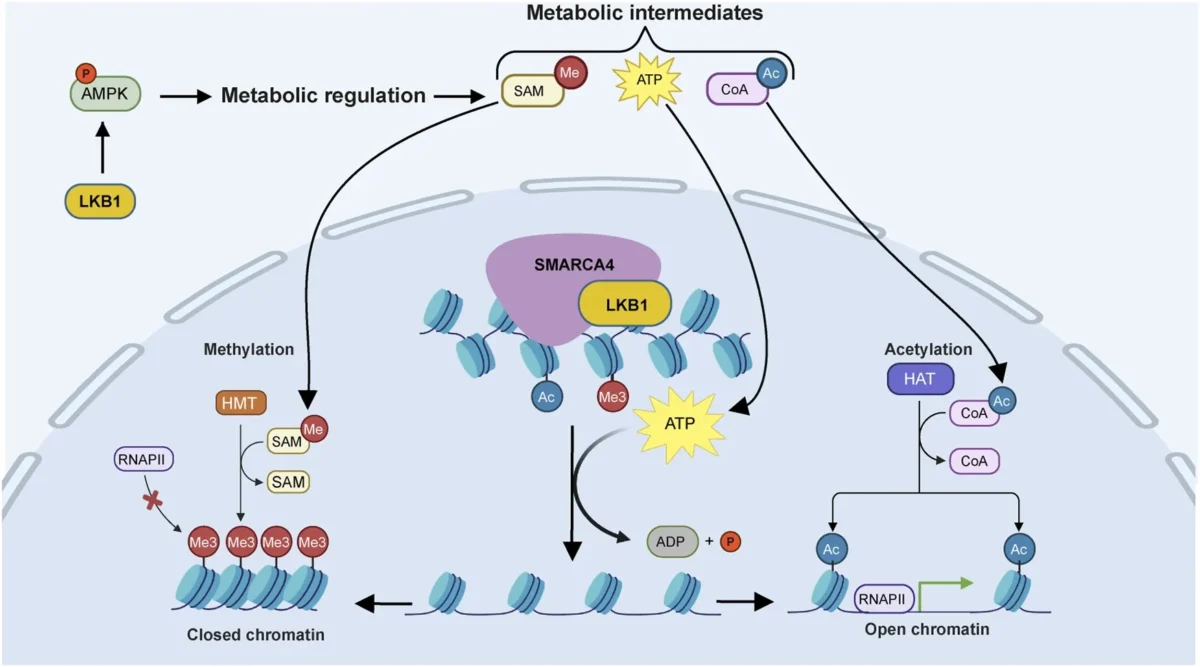
Fast forward many years, and the arrival of a new postdoc to my lab, Dr. Mohammad Redha Bourouh, who worked with my Research Assistant and computational expert Dr. Jinhong Kim, and after a few years (and COVID19 delays), we were able to show that LKB1 and SMARCA4 loss exhibit similar expression profiles in lung cancer cell lines and human lung tumours and that this interaction contributes to the regulation of diverse pathways in lung cancer. We show that LKB1 and SMARCA4 cooperate to prevent lung cancer through both direct and indirect mechanisms that converge to regulate metabolism and gene expression.
Our results provide evidence that implicates LKB1 as a master regulator, serving as an interface between metabolic pathways and gene expression. We propose that this function of LKB1 is mediated, in part, through its physical interaction with SMARCA4, positioning LKB1 as a nexus between metabolism and gene expression.